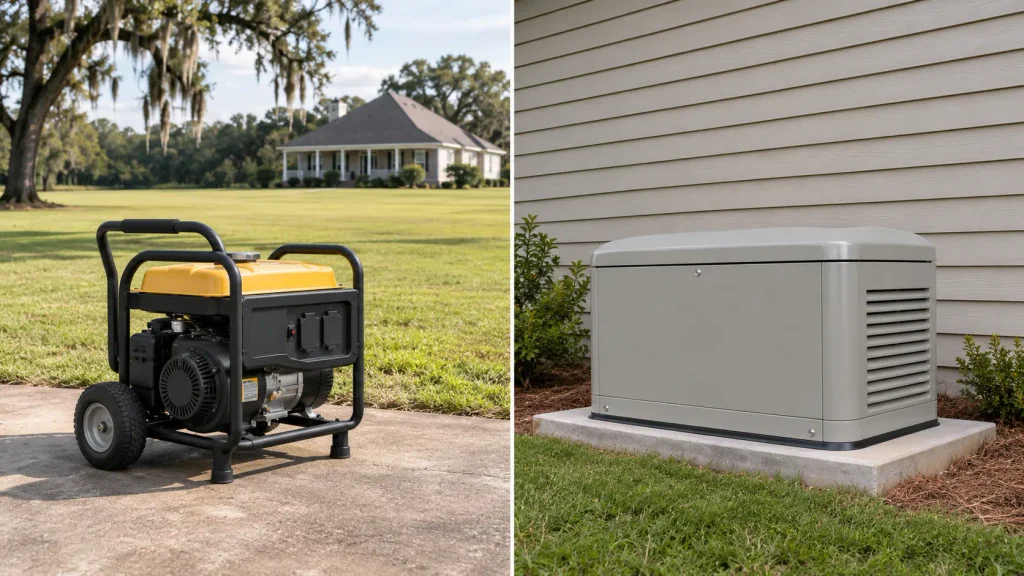
If you want to keep the fridge cold and a few lights on during a short outage, a portable generator may do the job. If you want the power to come on by itself or need to run your central air, a whole-home standby generator may be a better fit. Start with what you’d miss most if the lights went out tonight. Then think about how long you could go without it and who would get the generator running. An electrician in Laplace can help you match those needs to your home and budget.
A Portable Generator Can Cover the Basics
A portable generator gives you power where you set it up. Most models need someone to move the unit outdoors, start it, and check the fuel during an outage. Depending on its size, it may run a fridge, a fan, and a few lamps at the same time. It can make sense if outages are short and someone is usually home to handle the setup. Think about how you’d move the unit from storage and where you’d use it. Our guide to preparing for a power outage can help you make a list of what you want to keep running.
A Standby Generator Takes Over on Its Own
A standby generator stays in a fixed spot outside and connects to your home’s electrical system. An automatic transfer switch senses when utility power goes out. The system starts the generator and switches the home to backup power. When utility power comes back, the system switches the home back. That can help if you’re at work when the outage starts or you want the fridge to keep running while you’re away. With whole-home generator installation in Laplace, you can plan which parts of the house will get power and what the system needs to run them.
List What Needs to Run at the Same Time
Write down what needs power at the same time. A fridge and a lamp are a different job from central air, a water heater, and a range. Some items, like a fridge or an air conditioner, draw more power for a short time when they start. That brief jump in power is why you need to check starting watts as well as the power the items use once they’re running. Ask your electrician to check the power needs of the items on your list before you pick a unit. Our guide to what a standby generator can power during a storm gives examples of what you might want to keep on.
Make Room to Use a Portable Generator Safely
Check your yard before you buy a portable unit. Use it outdoors only, at least 20 feet from the house and any doors, windows, or vents. Point the exhaust away from your home and other buildings. The exhaust contains carbon monoxide, a deadly gas you can’t see or smell. Use carbon monoxide alarms with battery power or battery backup. If your lot is too tight for a safe spot, ask about other backup power options. Follow the CDC’s generator safety guidance and the instructions for your model each time you set it up.
Ask How Backup Power Will Connect to Your Home
If you want a portable unit to power built-in wiring, ask a qualified electrician about a transfer switch or other approved equipment for your setup. Never plug a generator into a wall outlet to feed power into the house. That can send power back onto utility lines and put people at risk of electric shock. A standby unit also needs a safe connection to your electrical system. As part of our residential electrical services, we can check your panel and explain what work the setup would need.
Compare the Full Cost and Fuel Needs
A portable unit often costs less up front. If you plan to connect it to the house, include that work in the price. For a standby unit, ask for a quote that includes the generator, switch, fuel connection, and work to get the site ready. Then look at fuel and upkeep. Check what fuel the portable unit takes and how long it can run on a full tank. If you need to refuel a gas model, shut it off and let it cool first. Many standby units run on natural gas or propane. If you use propane, ask how long your tank may last at the expected load. Ask what service each unit needs over time so you can compare those costs too.
Find the Right Backup Power for Your Home
Bring a short list of what you want to keep on and tell us what happened during your last outage. A.R.E Louisiana can review your home’s power needs and explain what it would take to install a backup system. Call (985) 652-6795 or request a generator installation estimate to talk through your options.